Water Damage Restoration in Maryland
Water can move beyond the area that looks wet, affecting flooring, wall cavities, insulation, trim, ceilings, and contents. The right response depends on the water source, materials affected, how long the loss has been active, and whether electrical, contamination, or regulated-material concerns may be present.
What to do first
Stop the source only when it is safe and you know how. Avoid standing water when electricity, damaged wiring, or submerged equipment may be involved. Keep people and pets away when sewage, outdoor floodwater, or unknown contamination is present. Take overview photographs before moving items or beginning cleanup when it is safe. Move small valuables away from the affected area without entering an unsafe space. Do not run household fans through sewage, visible microbial growth, or unknown contamination, and do not begin demolition when asbestos, lead, or another regulated material may be disturbed.
How Masters of Disaster approaches a water loss
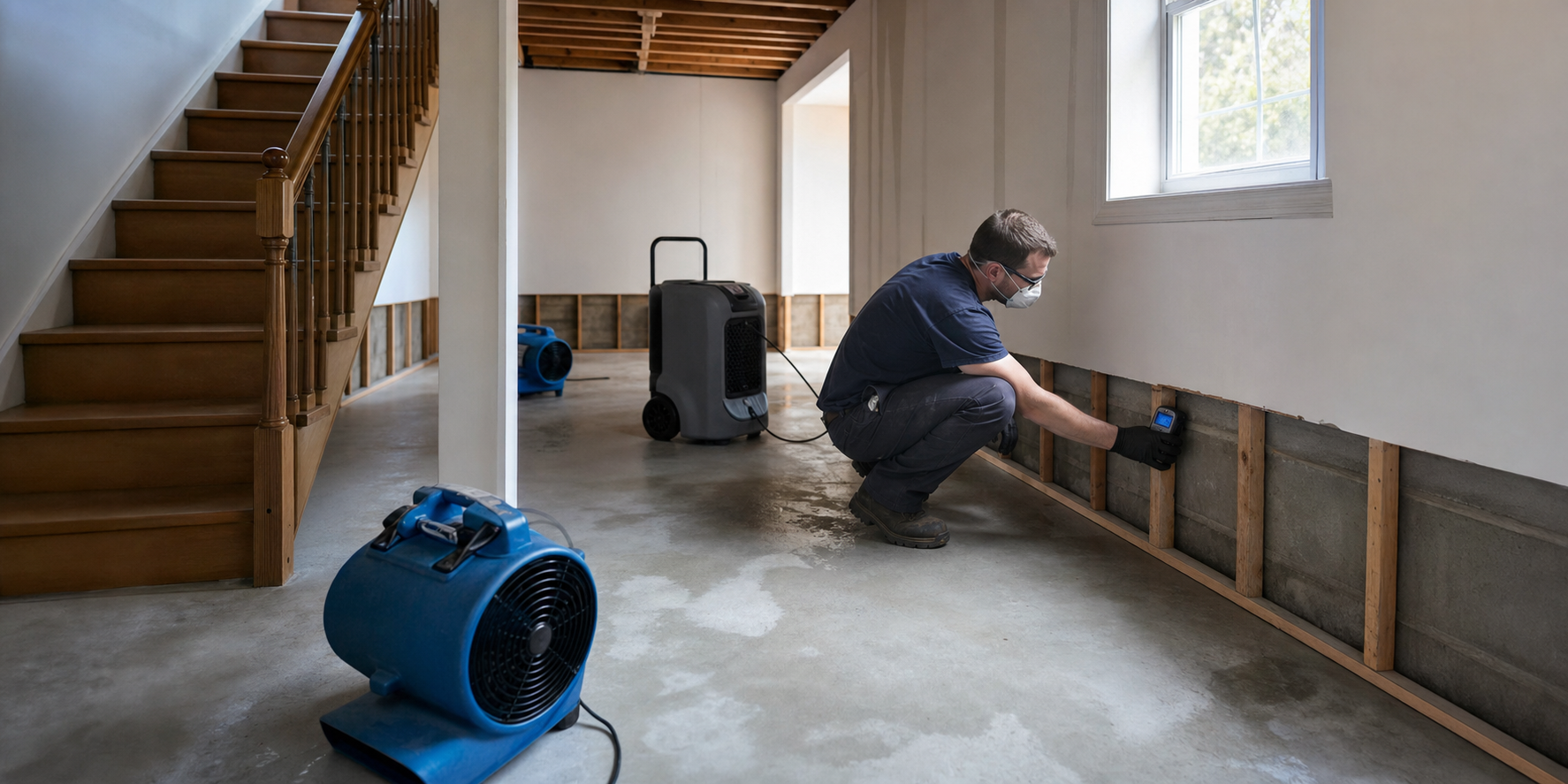
MOD begins with intake and a job-specific assessment rather than assuming that one standard equipment package fits every property. The initial process may include recording the reported source and timeline, photographing visible conditions, identifying affected rooms and materials, taking moisture readings where appropriate, reviewing access and safety concerns, and defining the work MOD is authorized and prepared to perform.
When the loss passes MOD’s safety, insurance, capability, and scope review, the authorized plan may include water extraction, appropriate drying-equipment deployment, moisture monitoring, removal of unsalvageable materials within scope, and organized photo and job documentation. Conditions are reviewed as the work progresses so decisions can follow the actual site data.
Extraction and structural drying
Removing standing water is only one part of a water-loss response. Moisture can migrate beneath flooring, behind trim, into wall assemblies, and through porous materials. Equipment decisions should follow the water source, materials affected, extent of moisture, environmental conditions, and measurements gathered during the job. Equipment should have a defined purpose and its placement and operating period should be documented.
Not every wet material can or should be dried in place. Contamination, deterioration, delamination, material type, duration, and access can change the appropriate response. MOD will explain the reasoning for its authorized work and identify conditions that require testing, another trade, or a qualified specialist.
Documentation for clear decisions
Depending on the authorized scope, the MOD job file may include intake information, site photographs, moisture observations or readings, a written scope or estimate, equipment-deployment and monitoring records, customer communications and authorizations, and closeout records for MOD’s work. Clear documentation helps the customer understand what was observed, what work was authorized, and what remains to be addressed.
Insurance communication
If insurance is involved, MOD can provide estimates and documentation for its own authorized work. The insurance policy and carrier determine coverage, claim handling, and payment. MOD does not promise that a carrier will cover a particular service, material, price, or outcome. Customers should continue communicating with their carrier about policy-specific questions while protecting the property from additional damage when it is safe to do so.
Common water-damage situations
Supply-line and plumbing failures can release a substantial amount of water quickly. Appliance and water-heater leaks may affect adjoining rooms or lower levels before the full extent is visible. Roof and exterior openings can introduce water into ceilings and wall assemblies, while outdoor floodwater can involve different safety and contamination concerns than an indoor supply-line loss. Staining, odors, peeling finishes, or recurring dampness may indicate a slow or concealed moisture source that should be understood before the visible symptom is covered or treated.
Frequently asked questions
Should I wait for an adjuster before calling? You can notify your carrier and follow its instructions, but do not ignore an active hazard or allow avoidable damage to worsen. Photograph conditions and obtain authorization before non-emergency work. MOD can document its observations and work but cannot determine coverage for the carrier.
Can wet drywall, flooring, or cabinets be saved? Sometimes, but not always. Material construction, water source, duration, access, deterioration, and contamination all affect the decision.
Does every water loss require the same equipment? No. Equipment decisions should follow the affected materials, extent of moisture, environmental conditions, and the response observed during monitoring.
What information should I provide when I call? Provide the property address, source of water, when it started, whether the source is stopped, rooms affected, standing-water depth if any, electrical concerns, contamination concerns, and whether anyone has already begun cleanup.
Call Masters of Disaster
If water is active, conditions are worsening, or electricity may be involved, call (410) 980-2976. For a non-immediate request, use the online form and include the property address, what happened, when it began, and which rooms or materials appear affected.
Water-Damage Help from Annapolis to Prince Frederick
Masters of Disaster serves property owners across the Annapolis–Prince Frederick corridor. If you are dealing with active water, a basement leak, an appliance or plumbing loss, or moisture after a storm, call or text us with the property address, the source of the water if known, when it began, and whether the source is still active.